
If you’ve experienced bloating after a stressful week or noticed your digestion changing during anxious periods, you’ve felt the gut-brain connection firsthand. Probiotics—live microorganisms that can benefit your health—are increasingly studied for their role in supporting both digestive comfort and mental well-being. But the science is more nuanced than many marketing claims suggest: effects depend on specific bacterial strains, research is still emerging, and probiotics work best as part of a broader lifestyle approach rather than as a standalone fix.
Understanding how your gut communicates with your brain, what the evidence actually shows, and how to identify a quality product can help you make an informed decision about whether probiotics belong in your routine.
What Are Probiotics and How Do They Work in the Gut?
Direct answer: Probiotics are live microorganisms that, when consumed in adequate amounts, may confer a health benefit, according to the World Health Organization and Food and Agriculture Organization definition. They work by interacting with your existing gut microbiota—the trillions of bacteria, fungi, and other microbes living in your digestive tract—to help maintain or restore microbial balance.
According to the National Center for Complementary and Integrative Health, probiotics are most commonly bacteria from the Lactobacillus and Bifidobacterium groups, though certain yeasts like Saccharomyces boulardii also qualify. What many people don’t realize is that probiotics are not a single, universal substance: each bacterial strain has a distinct genetic identity and potentially different effects on the body.
When you consume probiotics—whether through fermented foods or dietary supplements—these live microorganisms travel through your digestive system. Some may temporarily colonize your gut, others simply pass through while interacting with your resident microbiota and immune cells along the way. This interaction can influence digestive processes, immune function, and even the production of certain vitamins and short-chain fatty acids that nourish your intestinal lining.
The key principle to remember is strain specificity: if a specific kind of Lactobacillus helps with one concern, that doesn’t necessarily mean another Lactobacillus strain—or a Bifidobacterium—would do the same thing. This is why understanding exactly which strains a product contains matters far more than simply seeing « probiotic » on a label. Specialized retailers such as Euro-Pharmas offer curated selections of probiotic supplements with clearly identified strains, according to information communicated by the boutique.
It’s also worth distinguishing probiotics from related terms: prebiotics are types of fiber that feed beneficial gut bacteria, while fermented foods like yogurt or sauerkraut may contain live cultures but aren’t always standardized for specific strains or quantities the way supplements are.
The Gut-Brain Axis: How Your Digestive System Talks to Your Mind
The gut-brain axis is the two-way communication network linking your digestive system and your brain. This isn’t a metaphor—it’s a physical and chemical connection involving multiple pathways that allow your gut and brain to influence each other continuously.
The most direct route is the vagus nerve, a major nerve that runs from your brainstem to your abdomen, transmitting signals in both directions. Your gut microbiota can stimulate nerve endings in your intestinal wall, sending information up to your brain about the state of your digestive environment. At the same time, your brain can signal down to your gut, which is why stress or anxiety often triggers digestive symptoms like cramping or changes in bowel habits.

Beyond the vagus nerve, your gut microbiota produces or influences various chemical messengers. Some bacteria manufacture compounds that resemble or interact with neurotransmitters—chemical signals your brain uses to regulate mood, stress, and cognition. For example, certain gut bacteria produce gamma-aminobutyric acid (GABA), a neurotransmitter associated with relaxation, or influence the production of serotonin, much of which is actually made in your gut.
A third pathway involves your immune system and inflammation. Your gut houses roughly 70 percent of your immune cells, and imbalances in your microbiota can trigger low-grade inflammation. Inflammatory signals can travel through your bloodstream and affect brain function, potentially influencing mood, energy levels, and stress responses.
According to research discussed by Johns Hopkins Medicine, the enteric nervous system—sometimes called the « second brain » because it contains millions of nerve cells lining your gastrointestinal tract—can trigger emotional shifts in people with functional bowel disorders. Up to 30 to 40 percent of the population experiences functional digestive troubles at some point, and many notice a clear connection between stress and digestive discomfort.
This two-way relationship explains why a stressful work period might worsen bloating or why digestive issues can leave you feeling drained and irritable. It also forms the scientific foundation for investigating whether supporting gut health through probiotics might, in turn, support mental well-being.
Can Probiotics Really Improve Mental Well-Being?
This is where the science becomes both promising and cautious. Researchers are actively studying whether certain probiotic strains—sometimes called psychobiotics—can influence mood, stress response, and anxiety levels. The evidence so far shows potential, but with important limitations.
Several clinical studies have found that specific probiotic strains may modestly reduce subjective feelings of stress or anxiety in otherwise healthy adults. Other research has explored whether probiotics might support conventional treatment for conditions like irritable bowel syndrome, where gut symptoms and mood disturbances often overlap. According to NCCIH, a review of 21 studies involving about 1,700 participants suggested that probiotics, prebiotics, or synbiotics might offer some benefit for ulcerative colitis when used alongside standard medical treatment.
However, these findings come with essential context. First, effects are highly strain-specific: a study showing positive results for Lactobacillus rhamnosus on stress markers doesn’t mean any probiotic product will deliver the same outcome. Second, many studies are small, use varying methodologies, and measure different outcomes, making it difficult to draw firm, universal conclusions. Third, probiotics are being investigated as a potential support tool, not as a treatment for diagnosed mental health conditions like clinical depression or anxiety disorders.
Important nuance: Current research on probiotics and mental health is exploratory. While some studies show promise, the field is still emerging, and probiotics should never replace professional mental health care or prescribed treatments.
What the science does establish clearly is the biological plausibility: the gut-brain axis is real, the microbiota can influence it, and certain bacterial strains have measurable biochemical effects. What remains less certain is the magnitude, consistency, and clinical significance of mental health benefits across different people and contexts. If you’re considering probiotics for mood or stress support, realistic expectations and an understanding of the evidence limits are essential.
How to Choose a Quality Probiotic Supplement
Given the variability in probiotic products, knowing what to look for on a label can help you identify supplements worth your investment and trust.
Quality checklist for probiotic supplements
- Strains clearly identified by genus, species, and strain designation
- CFU count (colony-forming units) listed, ideally guaranteed through expiration
- Storage instructions specified (refrigeration requirements, if any)
- Transparent manufacturer information and third-party testing where available
- Avoid vague labels that only list « probiotic blend » without strain details
Strain identification is your first checkpoint. A quality product will list something like « Lactobacillus rhamnosus GG » or « Bifidobacterium longum 35624, » not just « Lactobacillus blend. » The strain code (the letters and numbers after the species name) tells you the exact genetic identity tied to specific research.
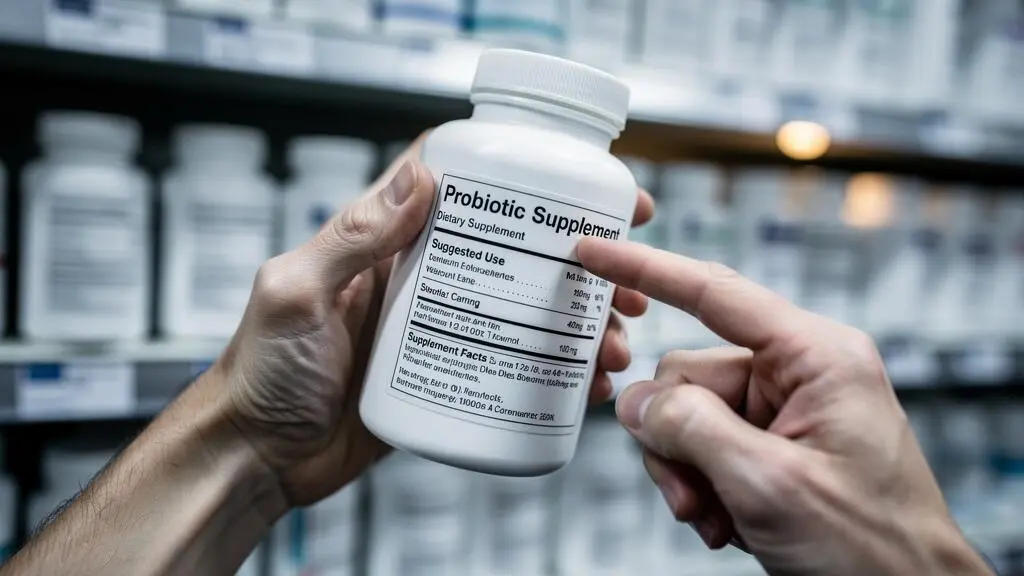
CFU count—the number of live microorganisms per serving—typically ranges from 1 billion to 100 billion or more. Higher isn’t automatically better; what matters is whether the count matches what research suggests is effective for a given strain and purpose. More important than the initial count is whether the manufacturer guarantees that CFU level through the product’s expiration date, not just at the time of manufacture.
Storage requirements vary by product. Some probiotics require refrigeration to maintain viability, while newer shelf-stable formulations use protective technologies to keep bacteria alive at room temperature. A trustworthy label will clearly state storage instructions and explain any special handling.
Manufacturer transparency matters in a supplement market with variable oversight. In the United States, the FDA regulates probiotics as dietary supplements, which means manufacturers can make structure-function claims without prior approval, but they cannot claim to treat or prevent diseases. Look for brands that provide clear contact information, disclose testing practices, and avoid exaggerated health promises.
If you’re uncertain which product to choose or whether a probiotic is appropriate for your situation, consulting a healthcare professional—such as a registered dietitian or your primary care physician—can provide personalized guidance based on your health history and goals.
Natural Habits That Support Your Gut and Your Mind
Probiotics don’t work in isolation. Your daily habits create the environment in which your gut microbiota—and by extension, the gut-brain axis—either thrives or struggles. Building a routine that nourishes both digestion and mental well-being involves more than supplementation.
Dietary fiber acts as food for your beneficial gut bacteria. Whole grains, legumes, fruits, vegetables, nuts, and seeds provide the diverse plant compounds and prebiotic fibers that help your microbiota flourish. A varied, plant-rich diet supports microbial diversity, which research increasingly links to better health outcomes.
Fermented foods offer a natural source of live cultures. Plain yogurt with active cultures, kefir, sauerkraut, kimchi, miso, and kombucha can introduce beneficial microbes into your system, though the specific strains and quantities vary widely compared to standardized supplements. Including these foods regularly adds both probiotics and valuable nutrients to your diet.

Sleep quality directly affects both gut health and mental well-being. Poor sleep can alter your microbiota composition and increase inflammation, while chronic sleep deprivation worsens stress sensitivity and mood regulation. Prioritizing consistent sleep schedules and adequate rest supports the entire gut-brain system.
Physical activity benefits your microbiota independently of diet. Regular movement—even moderate activity like daily walks—has been associated with greater microbial diversity and improved mood, likely through multiple mechanisms including reduced inflammation and enhanced neurotransmitter production.
Stress management closes the loop of the gut-brain axis. Since stress directly impacts gut function and microbiota balance, practices that help you regulate stress—whether through mindfulness, breathing exercises, time in nature, or social connection—support digestive health while also addressing mental well-being directly. Exploring the natural health practices that resonate with your lifestyle can complement any probiotic routine.
Probiotics, whether from food or supplements, work best when integrated into these broader lifestyle patterns rather than treated as a standalone solution.
Key Takeaways and When to Seek Professional Advice
Probiotics are live microorganisms that can support gut health by interacting with your existing microbiota. Through the gut-brain axis—a bidirectional communication system involving nerves, chemical messengers, and immune signals—your digestive health can influence your mental well-being, and vice versa.
Research on probiotics and mental health is promising but still emerging. Effects are strain-specific, meaning not all probiotic products will deliver the same benefits. When choosing a supplement, prioritize clear strain identification, verified CFU counts, proper storage, and transparent manufacturing. Fermented foods offer a natural, food-based alternative, though with less standardization than supplements.
Probiotics work best within a holistic approach that includes fiber-rich foods, regular physical activity, quality sleep, and stress management. They are a support tool, not a replacement for medical treatment.
How long before noticing effects: Individual responses vary widely. Some people report digestive improvements within a few days to two weeks, while research on mood-related outcomes often measures effects over four to eight weeks. Patience and consistency matter, as does recognizing that probiotics don’t work equally for everyone.
When to consult a healthcare professional: If you experience persistent digestive symptoms (chronic diarrhea, severe bloating, blood in stool), ongoing mental health concerns (persistent anxiety, depression, mood changes), or if you have a compromised immune system or serious health condition, consult a doctor before starting any supplement. Probiotics are generally considered safe for most healthy adults, but personalized medical advice is essential for complex or persistent symptoms.
Understanding the connection between your gut and your mental well-being empowers you to make informed choices. Whether you decide to try a probiotic supplement, increase fermented foods in your diet, or focus on lifestyle habits that nourish your microbiota, the goal is the same: supporting both your digestive comfort and your overall sense of well-being with realistic expectations and evidence-based strategies. Recognizing why mental health matters within this broader picture of whole-person wellness helps you prioritize the approaches that truly serve your long-term health.