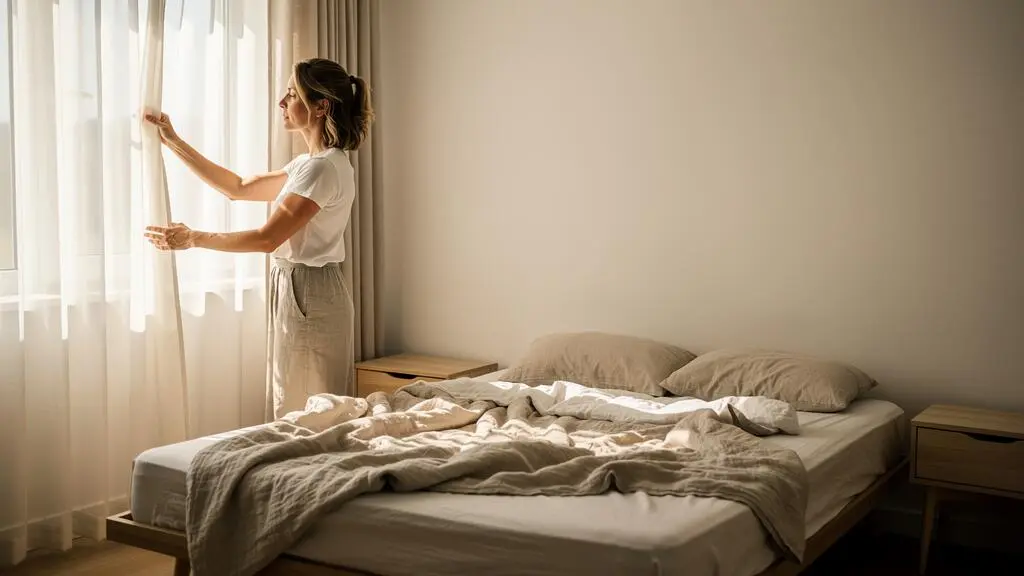
You spend the recommended hours in bed, yet wake up feeling drained. Your mind races when your head hits the pillow. You find yourself staring at the ceiling at three in the morning, wondering why sleep has become so elusive. If this sounds familiar, you are not alone, and more importantly, there are concrete steps you can take starting today to begin rebuilding restful, restorative sleep.
Quality sleep is not just about time spent lying down. It is the result of a careful alignment between your body’s internal clock, your daily habits, and your ability to calm your mind before bed. The promising news is that simple, low-cost lifestyle adjustments targeting your circadian rhythm, stress management, and evening routine can start working within days or weeks, without relying on medications or expensive interventions.
This article will walk you through what quality sleep truly means, explain how stress quietly sabotages your rest, and guide you step by step through the lifestyle changes you can implement immediately to reclaim your nights and your energy.
What does quality sleep actually mean?
Before you can improve your sleep, it helps to understand what you are aiming for. Quality sleep is not simply about clocking seven or eight hours in bed. It is about how smoothly you fall asleep, how continuously you stay asleep, and how rested you feel when you wake up.
The CDC defines quality sleep as uninterrupted and restorative. That means falling asleep within a reasonable time, sleeping through the night without frequent awakenings, and waking up feeling refreshed rather than foggy or exhausted. If you routinely take more than thirty minutes to fall asleep, wake up multiple times during the night, or feel tired despite spending enough time in bed, your sleep quality may be compromised.
This is where the concept of sleep hygiene becomes essential. Sleep hygiene refers to the collection of habits and environmental factors that promote consistent, uninterrupted sleep. It includes everything from your bedtime routine to the temperature of your bedroom to the timing of your meals and caffeine intake.
Another key concept is your circadian rhythm, your body’s internal clock that regulates when you feel alert and when you feel sleepy. This rhythm is influenced primarily by light exposure, meal timing, and physical activity. When your daily habits align with your circadian rhythm, falling asleep and waking up becomes easier and more natural.
Recognizing the signs of poor sleep quality can help you understand where to focus your efforts. Common symptoms include difficulty falling asleep, waking up frequently during the night, waking up too early and being unable to return to sleep, persistent daytime fatigue, difficulty concentrating, irritability, and reliance on caffeine to stay alert.
Important to know: If you experience ongoing sleep problems despite making lifestyle changes, or if you suspect a sleep disorder such as sleep apnea or chronic insomnia, consult a healthcare provider. Lifestyle adjustments are powerful tools, but they are not substitutes for medical evaluation when a persistent disorder is present.
How stress and anxiety quietly sabotage your sleep
Stress and anxiety are among the most common causes of disrupted sleep, yet many people underestimate just how deeply mental strain affects the body’s ability to rest. A 2024 survey commissioned by American Academy of Sleep Medicine found that 74% of Americans report disrupted sleep due to stress and 68% report losing sleep due to anxiety.
When you are stressed, your body remains in a state of heightened alertness, sometimes called hyperarousal. Your mind races, replaying the events of the day or anticipating tomorrow’s challenges. Physiologically, stress activates the hypothalamic-pituitary-adrenal axis, triggering the release of cortisol and other stress hormones that promote wakefulness and inhibit the relaxation necessary for sleep onset.
Research summarized on the NIH‘s NCBI Bookshelf describes a bidirectional relationship between the body’s stress system and sleep: stress hormones can trigger arousal and sleeplessness, while sleep disruption in turn raises cortisol levels. This creates a vicious cycle where poor sleep amplifies your sensitivity to stress the next day, and that heightened stress further degrades your sleep the following night.

Understanding this cycle is the first step toward breaking it. Managing stress during the day and implementing calming practices before bed can interrupt the pattern and allow your nervous system to shift into a restorative state at night.
Emerging research also explores the connection between gut health, stress management, and sleep quality through what scientists call the gut-brain axis. Some supplements, such as Melioran Psychobiotic, are marketed by their manufacturers as supporting this relationship, though such products should be considered complementary to foundational lifestyle habits rather than replacements for them.
For readers looking to explore complementary approaches to managing anxious thoughts that interfere with sleep, natural remedies to treat anxiety may offer additional context, though it is essential to prioritize proven sleep hygiene practices first.
Simple lifestyle changes you can make today
The foundation of better sleep rests on a handful of straightforward daily habits. These changes require no special equipment, no prescriptions, and no significant financial investment. What they do require is consistency and a willingness to adjust routines that may have been disrupting your rest for months or years.
Set consistent sleep and wake times, even on weekends. Your circadian rhythm thrives on regularity. Going to bed and waking up at the same time every day, including weekends, helps stabilize your internal clock. This consistency makes it easier to fall asleep at night and wake up feeling alert in the morning. Choose a bedtime that allows for seven to nine hours of sleep and stick to it.
Get bright light exposure in the morning. Natural daylight, especially within the first hour after waking, is one of the most powerful signals to reset your circadian rhythm. Spend at least fifteen to thirty minutes outside in the morning, or near a bright window if outdoor access is limited. This simple habit tells your body it is daytime, promoting alertness now and sleepiness later.
Move your body during the day. Regular physical activity improves sleep quality and helps reduce the time it takes to fall asleep. Aim for at least thirty minutes of moderate activity most days of the week. Just avoid vigorous exercise within two to three hours of bedtime, as it can be temporarily stimulating.
Limit caffeine, especially in the afternoon and evening. Caffeine has a half-life of about five to six hours, meaning that a cup of coffee consumed at three in the afternoon still has half its stimulating effect at nine in the evening. The CDC recommends avoiding caffeine in the late afternoon and evening to prevent interference with sleep onset.
Turn off screens at least thirty minutes before bed. The blue light emitted by phones, tablets, and computers suppresses melatonin production, the hormone that signals your body it is time to sleep. Replace screen time with a calming activity such as reading a book, listening to music, or gentle stretching.
Avoid large meals and alcohol close to bedtime. Eating a heavy meal or drinking alcohol within two to three hours of sleep can disrupt your rest. Alcohol may make you feel drowsy initially, but it fragments sleep later in the night and reduces overall sleep quality.
These changes work best when applied together, creating a supportive framework for restorative rest. Understanding the benefits of restful sleep can further motivate consistent application of these habits over time.
Build a wind-down routine that calms your mind before bed
Even with solid daytime habits in place, many people struggle to transition from the busyness of the evening into a calm, sleep-ready state. This is where a deliberate wind-down routine becomes essential. Creating a buffer of thirty minutes to an hour before bed gives your mind and body time to shift gears.
Start by setting a consistent time each evening when you begin winding down. This might be thirty to sixty minutes before your target bedtime. During this period, avoid stimulating activities such as work emails, intense conversations, or action-packed television.
Create a calm environment. Dim the lights in your home to signal to your brain that nighttime is approaching. Lower the temperature in your bedroom to between 60 and 67 degrees Fahrenheit, a range that most sleep experts consider optimal for rest. Remove sources of noise or use a fan or white noise machine if needed.
Practice relaxation techniques. Deep breathing, progressive muscle relaxation, or gentle stretching can all help activate your parasympathetic nervous system, the part of your nervous system responsible for rest and recovery. Try inhaling slowly for four counts, holding for four counts, and exhaling for six counts. Repeat this cycle for five to ten minutes.

Choose calming pre-sleep activities. Read a book, listen to soothing music, take a warm bath, or write in a journal. The key is to find an activity that you genuinely find relaxing and that does not involve screens or mentally stimulating content.
Prepare your bedroom for sleep. Your bedroom should be cool, dark, and quiet. Use blackout curtains if outside light is an issue, and consider an eye mask or earplugs if needed. Reserve your bed for sleep and intimacy only, not for working, watching television, or scrolling through your phone.
Building this kind of routine may feel awkward at first, especially if you are used to staying busy right up until the moment you collapse into bed. Give yourself permission to slow down. Over time, your brain will begin to associate these activities with sleep, making the transition smoother and more automatic.
For those interested in deepening their relaxation practice beyond the bedroom, exploring relaxation techniques for daily well-being can offer additional tools to manage stress throughout the day, further supporting your nighttime rest.
FAQ: your questions about regaining quality sleep
How long does it take for lifestyle changes to improve sleep quality?
Most people begin to notice gradual improvements within one to three weeks of consistently applying sleep hygiene practices. However, the timeline varies depending on how long your sleep has been disrupted, the severity of your stress levels, and how faithfully you stick to the new habits. Some changes, such as morning light exposure and consistent wake times, may show benefits within a few days, while others, such as stress management and evening routines, may take longer to fully take effect. Patience and consistency are essential, and results are rarely immediate or guaranteed.
What should I do tonight to sleep better without medication?
Tonight, start by turning off all screens at least thirty minutes before your planned bedtime. Dim the lights in your home, and spend those thirty minutes doing something calming such as reading, listening to quiet music, or practicing slow, deep breathing. Make sure your bedroom is cool, dark, and quiet. Avoid caffeine after mid-afternoon and skip any heavy meals or alcohol within two to three hours of sleep. These small adjustments can create a more favorable environment for rest, even on the first night you try them.
How does morning light exposure affect my circadian rhythm?
Exposure to bright light in the morning helps regulate your circadian rhythm by signaling to your brain that it is time to be awake and alert. This exposure suppresses melatonin production during the day and sets a timer for melatonin to rise again in the evening, making it easier to feel sleepy at bedtime. Getting outside for at least fifteen to thirty minutes within an hour of waking is one of the simplest and most effective ways to strengthen this natural cycle.
When is poor sleep a sign that I should see a doctor?
You should consult a healthcare provider if your sleep problems persist for more than a few weeks despite consistent lifestyle changes, if you experience severe daytime sleepiness that interferes with work or safety, if you suspect you may have a sleep disorder such as sleep apnea or chronic insomnia, or if poor sleep is accompanied by other concerning symptoms such as chest pain, severe snoring, or gasping during sleep. Lifestyle changes are powerful, but they are not substitutes for professional medical evaluation when a disorder may be present.
What are natural ways to calm anxiety before bed?
Natural methods to calm anxiety before bed include practicing slow, deep breathing exercises, progressive muscle relaxation, guided meditation, journaling to release racing thoughts, drinking caffeine-free herbal teas such as chamomile, and creating a predictable, calming bedtime routine. Physical activity earlier in the day also helps reduce overall anxiety levels. These techniques work best when practiced consistently over time, rather than only in moments of acute stress.
Regaining quality sleep is not about perfection or overnight transformations. It is about making small, deliberate adjustments to your daily routine and giving those changes time to work. By understanding what quality sleep truly means, recognizing how stress disrupts your rest, and applying simple lifestyle changes such as consistent sleep schedules, morning light exposure, limited evening screens, and a calming wind-down routine, you can begin rebuilding the foundation for restful nights and energized days.
These habits are free, immediately accessible, and grounded in well-established sleep science. They will not work miracles in a single night, but applied consistently over weeks, they can produce meaningful, lasting improvements. And if your sleep problems persist despite your best efforts, seeking guidance from a healthcare provider is a responsible and important next step.
Health disclaimer: This article provides general information about lifestyle habits that may support better sleep. It is not intended as medical advice, diagnosis, or treatment. If you have ongoing sleep problems, suspect a sleep disorder, or have other health concerns, consult a qualified healthcare provider for personalized evaluation and recommendations.